Tire questions usually come up at the worst time. The pressure light turns on before work, one tire keeps losing air, or the tread looks fine until someone points out the inside edge is worn almost smooth.
Tires tell on the car.
TPMS, tire replacement, tire rotation, alignment, and balancing all connect in ways drivers do not always see right away. Here are the tire service questions we hear from customers all the time.
1. Why Is My TPMS Light On?
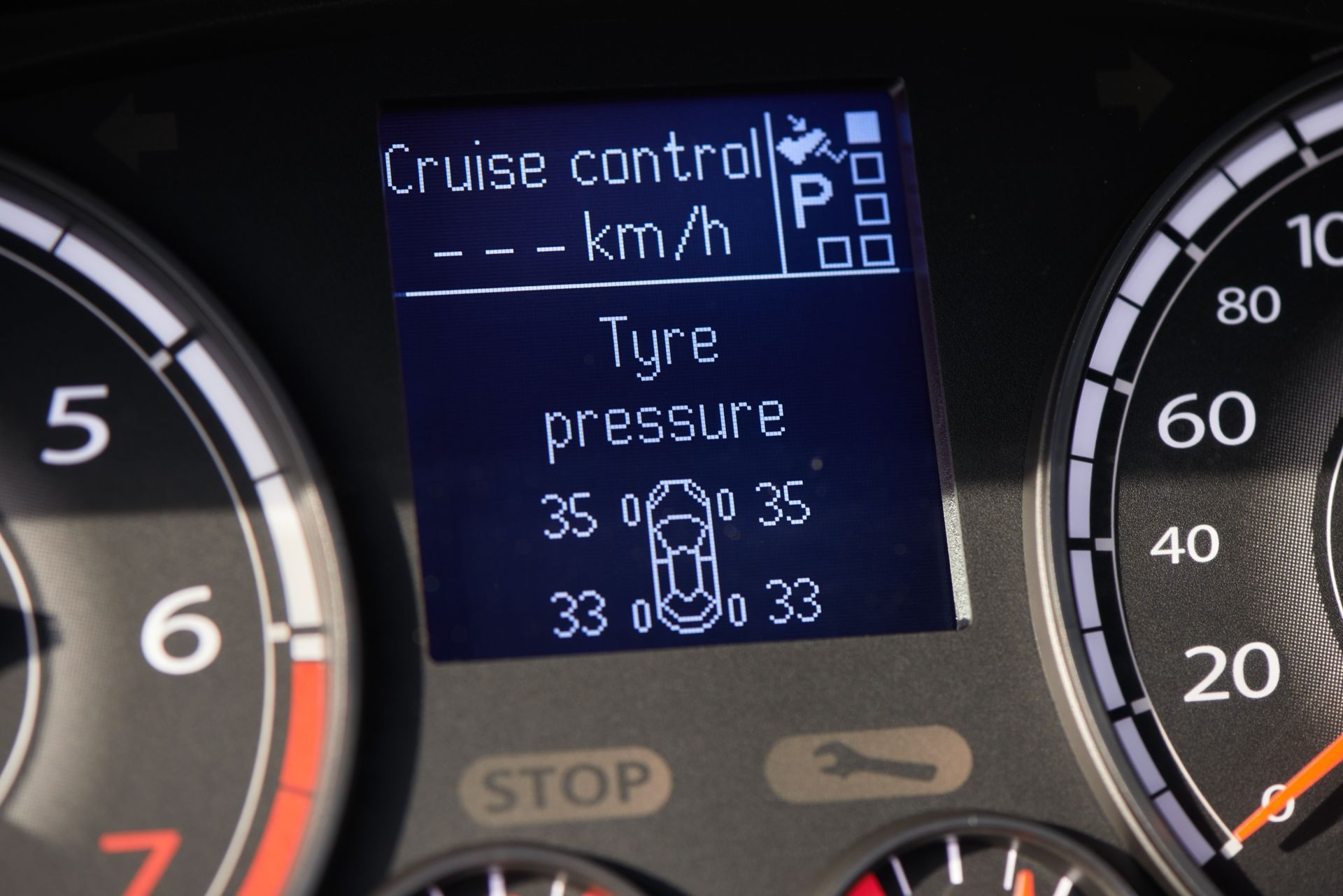
The TPMS light indicates that one or more tires may be low or that the monitoring system has a fault. A tire can look normal and still be several pounds under the recommended pressure.
Check the pressure when the tires are cold. Use the number on the driver door placard, not the number molded into the tire sidewall.
2. Why Does The TPMS Light Come On When The Weather Changes?
Air pressure drops when temperatures fall. A tire that was barely at the right pressure yesterday may be low enough to trigger the light after a cool night.
This is common during seasonal changes. It does not always mean the tire is damaged, but it does mean the pressure needs to be set correctly.
3. Can I Drive With The TPMS Light On?
You can usually drive a short distance if the tire is not visibly flat, but do not ignore it. Low pressure builds heat, wears the tire faster, and affects braking and handling.
If the tire looks low or the car pulls to one side, stop and check it before driving farther.
4. Why Does One Tire Keep Losing Air?
A slow leak can come from a nail, a valve stem, a bead leak, a cracked wheel, or corrosion where the tire meets the rim. Sometimes the leak is tiny enough that it takes days to show up.
Adding air over and over is a clue, not a fix. That tire needs to be checked.
5. Can A Punctured Tire Be Repaired?
Sometimes. A puncture in the tread area may be repairable if it is not too large and the tire was not driven flat. Sidewall damage is different and usually means replacement.
We look at the location, size, tire condition, and whether the inside structure was damaged.
6. When Do I Need New Tires?
You need new tires when the tread depth is too low, the sidewalls are cracked, cords are showing, bubbles appear, or the tire has unsafe damage. Age matters too, even if the tread still looks decent.
Rubber hardens over time. Old tires can lose grip before they look terrible.
7. Why Are My Tires Wearing Unevenly?
Uneven wear usually points to pressure problems, missed rotations, alignment issues, worn suspension parts, or driving conditions. The wear pattern tells the story.
Inside-edge wear, cupping, feathering, or one tire wearing faster than the others should not be brushed off. A tire inspection can help find the cause before a new set gets ruined.
8. How Often Should Tires Be Rotated?
Many vehicles do well with rotations every 5,000 to 7,500 miles or with every oil change, but the best interval depends on the vehicle and tire wear. Front, rear, and drive tires do different work.
Regular maintenance, including tire rotation, helps the entire set wear more evenly.
9. What Is Tire Balancing?
Balancing corrects small weight differences in the tire and wheel assembly. If the balance is off, you may feel vibration at certain speeds, often on the highway.
A balanced tire spins more evenly. If vibration remains after balancing, the wheel, tire, suspension, or alignment may need a closer look.
10. What Is Wheel Alignment?
Alignment adjusts the angles of the wheels so the tires meet the road correctly. Poor alignment can cause pulling, crooked steering, uneven tire wear, and a car that feels nervous at speed.
A hard pothole hit or curb strike can knock alignment out quickly.
11. Do I Need Alignment With New Tires?
It is smart to check alignment when installing new tires, especially if the old tires wore unevenly. New tires on a poorly aligned vehicle can start wearing badly right away.
That is frustrating and expensive because the new set never gets a fair start.
12. Why Does My Steering Wheel Shake?
A steering wheel shake can come from tire balance, bent wheels, uneven tire wear, tire damage, or loose front-end parts. If the shake occurs only while braking, the brakes may be involved as well.
The speed and timing of the vibration help narrow the cause.
13. Should I Replace One Tire Or All Four?
It depends on tread depth, vehicle type, drivetrain, and tire condition. On some AWD vehicles, mismatched tread depth can create drivetrain stress. Replacing one tire may be fine if the others are nearly new.
If the other tires are worn, replacing two or four may make more sense.
14. Why Does My Tire Look Fine But Still Need Replacement?
Some tire problems go unnoticed at a glance. Inner-edge wear, sidewall cracking, bubbles, age, uneven tread, and internal damage may not stand out unless the tire is inspected closely.
A tire can look okay from the outside and still be unsafe for daily driving.
15. How Can I Make My Tires Last Longer?
Keep them properly inflated, rotate them on schedule, fix alignment problems early, avoid driving on low pressure, and check tread wear regularly. If the car starts pulling, shaking, or making tire noise, do not wait until the tread is gone.
Good tire care is not complicated. It just needs consistency.
Get TPMS, Tire Replacement, And Tire Service In Mississippi, With William Wells Tire & Auto
If your TPMS light is on, your tires are wearing unevenly, or you are not sure whether a tire can be repaired, William Wells Tire & Auto can help at our Columbus, West Point, and Starkville, MS, locations.