Why is my temperature light on?
Why Is My Temperature Light On? Understanding the Warning, What Causes It, and How to Protect Your Engine
The temperature warning light is one of the most critical alerts on your dashboard. When it turns on—whether steady or flashing—it means your engine is running hotter than its designed operating range. Unlike minor alerts that may indicate moderate issues, the temperature light always signals a serious problem.
Heat is the enemy of your engine. When temperatures exceed safe limits, mechanical components expand, lubrication breaks down, and the risk of engine damage grows rapidly.
Drivers across Starkville, Columbus, West Point, and the surrounding Mississippi Golden Triangle often experience overheating during long drives, heavy summer heat, stop-and-go traffic, rural travel, or simply due to aging components. But regardless of where or when the light appears, it means the same thing:
Your engine is experiencing heat levels it cannot sustain, and continuing to drive may cause severe internal damage.
You may immediately wonder:
- What caused the temperature light to come on?
- Can I keep driving?
- Is my engine in danger?
- What should I do right now?
- How do I prevent this from happening again?
This complete guide gives you every answer you need.
1. What the Temperature Warning Light Really Means
Your engine runs at a precise temperature range controlled by the cooling system. When system performance drops—even slightly—the temperature begins to rise. Once heat reaches unsafe levels, sensors activate the warning light.
There are two forms of this warning:
Steady Temperature Light
Indicates the engine is hotter than normal. Immediate attention required.
Flashing Temperature Light
Signals active overheating or a rapid temperature climb. You must stop immediately.
Once the light is on, your cooling system is no longer managing heat properly. At this moment:
- Coolant may not be circulating
- Oil may be thinning
- Pressure may be rising
- Components may be expanding
- Heat may be pooling inside the engine
- Steam may be building
This condition must be handled quickly to prevent major engine damage.
2. The Most Common Reasons Your Temperature Light Comes On
Your cooling system relies on multiple components working together. When even one fails, overheating begins.
Below are the most common causes.
1. Low Coolant Level
Coolant absorbs heat inside the engine and carries it to the radiator to be released. When coolant levels drop:
- Heat rises quickly
- Circulation weakens
- The temperature light turns on
Low coolant is one of the most common overheating causes throughout Mississippi due to climate swings, evaporation, and aging cooling parts.
Reasons coolant becomes low include:
- Small leaks
- Worn hoses
- Cracked reservoir
- Faulty radiator cap
- Evaporation during hot summers
- Previous overheating incidents
Without enough coolant, overheating is unavoidable.
2. Coolant Leak
Leaks reduce coolant levels and pressure, causing overheating rapidly.
Common leak points:
- Radiator
- Water pump
- Heater core
- Thermostat housing
- Hoses and clamps
- Overflow tank
Symptoms include:
- Sweet smell
- Steam from the engine bay
- Coolant puddles under the vehicle
- Temperature rising at stoplights
Temperature and humidity fluctuations in Mississippi accelerate wear on cooling system parts.
3. Thermostat Failure
The thermostat controls the flow of coolant. When it sticks closed:
- Coolant becomes trapped
- Heat cannot escape
- The engine overheats quickly
Thermostat failure is one of the most common sudden overheating causes—and can happen even during short drives near Starkville’s MSU campus or Columbus’s busy Main Street.
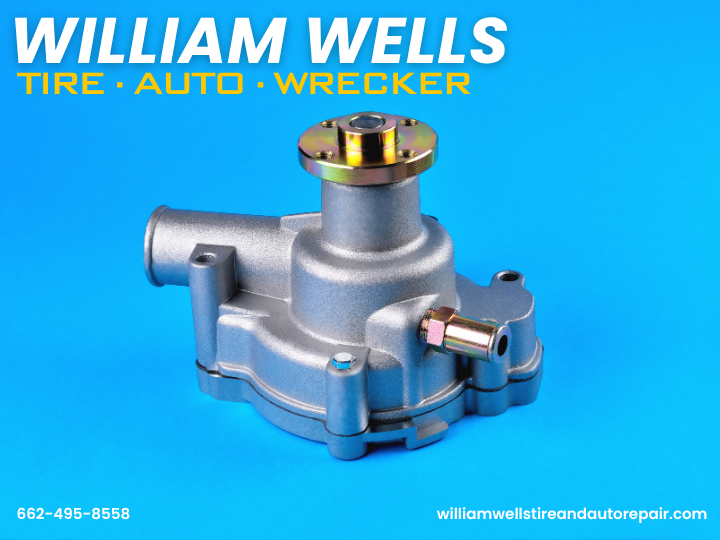
4. Water Pump Failure
The water pump circulates coolant throughout the engine. When it fails, coolant cannot move.
Signs include:
- Coolant leaking near the pump
- Squealing or grinding noises
- Temperature rising during acceleration
- Overheating while driving
Water pumps wear out gradually and often fail when coolant leaks through the pump’s weep hole.
5. Radiator Problems or Blockages
Radiators cool hot coolant. When airflow or internal flow is restricted:
- Coolant cannot cool down
- Heat returns to the engine
- The warning light activates
Common causes:
- Internal corrosion
- Debris blockage
- Failing radiator fan
- Damaged cooling fins
- Mineral buildup
Mississippi’s mix of humidity, heat, and road debris often contributes to radiator wear.
6. Radiator Fan Failure
The fan is essential when:
- Idling
- Driving slowly
- Using the A/C
- Stopped in traffic
If the fan fails due to a sensor, relay, motor, or wiring issue, the engine overheats rapidly.
Symptoms include:
- Temperature rising at idle
- Cooling off once driving
- Poor A/C performance at slow speeds
Radiator fan failure is extremely common in warm southern climates.
7. Air Pockets in the Cooling System
Air pockets restrict coolant flow and cause sudden overheating. They often form after:
- Coolant changes
- Water pump replacements
- Hose repairs
- Leaks
- Overheating incidents
Even with full coolant, trapped air can create overheating episodes.
8. Temperature Sensor Malfunction
A failing sensor can:
- Send false overheating warnings
- Fail to detect true overheating
- Cause erratic temperature readings
This requires diagnostic testing, as inaccurate readings can mask deeper issues.
9. Head Gasket Failure
This is one of the most severe overheating-related problems.
Signs include:
- White smoke from exhaust
- Milky oil
- Sweet smell from tailpipe
- Rough running engine
- Coolant disappearing quickly
- Rapid or immediate overheating
A blown head gasket requires immediate attention to avoid major internal damage.
3. The Most Dangerous Mistakes Drivers Make When the Temperature Light Turns On
Your actions in the first few minutes determine whether your engine survives the overheating event.
Below are the biggest mistakes drivers make.
Mistake #1: Continuing to Drive
Driving while overheating can cause:
- Warped cylinder heads
- Blown head gasket
- Cracked engine block
- Total engine failure
Damage can occur in minutes.
Mistake #2: Turning On the A/C
The air conditioner adds engine load and increases heat.
When the temperature light is on, turn the A/C off immediately.
Mistake #3: Opening the Radiator Cap While Hot
Radiator caps remain under extreme pressure when hot. Opening one can release boiling coolant violently.
This is extremely dangerous.
Mistake #4: Adding Cold Water to a Hot Engine
Rapid temperature shock can crack metal components instantly.
Mistake #5: Letting the Engine Idle to “Cool Down”
Idling often makes overheating worse if:
- Coolant is not circulating
- Fans are not running
- Airflow is restricted
Turning the engine off is safer.
4. What To Do Immediately When Your Temperature Light Turns On
Here is the safe and correct response sequence:
Step 1: Turn Off the A/C
Reduces load and heat generation.
Step 2: Turn On the Heater
Transfers heat away from the engine and into the cabin.
It may feel uncomfortable, but it helps lower engine temperature long enough to pull over safely.
Step 3: Pull Over and Turn Off the Engine
Stop as soon as possible in a safe location.
Step 4: Do NOT Open the Radiator Cap
Pressure remains high for a long time.
Step 5: Check Coolant Level in the Overflow Tank
Never open the radiator while hot.
Step 6: Look for Leaks, Steam, or Unusual Smells
This helps identify the source.
Step 7: Contact a trusted cooling system professional
Overheating requires proper diagnostics and repair.
5. Why Overheating Is So Dangerous
Excessive heat wreaks havoc on engine components. It causes:
- Oil breakdown
- Seal and gasket failure
- Metal warping
- Pressure spikes
- Internal friction
- Coolant boiling
- Component distortion
Severe overheating can lead to:
- Cracked cylinder heads
- Blown head gaskets
- Loss of compression
- Engine seizure
- Complete engine failure
This is why the temperature light must never be ignored.
6. How Professionals Diagnose Cooling System Problems
A comprehensive diagnostic evaluation includes:
Cooling System Pressure Test
Identifies leaks and pressure loss.
Thermostat Function Test
Checks proper opening temperature.
Radiator Flow and Airflow Analysis
Verifies heat dissipation.
Water Pump Inspection
Checks for leaks and proper coolant circulation.
Coolant Condition Test
Determines if coolant is contaminated or degraded.
Fan and Electrical System Evaluation
Verifies fan operation, relays, fuses, and wiring.
Combustion Leak Test
Detects head gasket issues.
Air Pocket Removal
Bleeds trapped air from the system.
Infrared Temperature Scanning
Reads surface temperatures across the engine and cooling system.
A full diagnostic ensures proper repair that prevents repeat overheating.
7. Why Golden Triangle Drivers Experience Temperature Light Issues More Frequently
Local climate and driving conditions contribute heavily to overheating risks.
1. Hot, Humid Summers
Mississippi heat accelerates evaporation and coolant breakdown.
2. Long Rural Drives
Extended driving increases heat cycles and load.
3. Heavy Idling
Traffic around MSU, Highway 12, and Highway 45 leads to long idling times.
4. Frequent Temperature Swings
Seasonal changes stress hoses and seals.
5. Dust and Debris
Rural roads introduce debris that can block radiators.
6. Older Vehicle Population
The region has many older vehicles more prone to cooling failures.
8. How to Prevent Future Temperature Light Issues
Proactive maintenance is the best way to protect your cooling system.
1. Regular Coolant Flushes
Removes old coolant and corrosion.
2. Hose and Belt Inspections
Prevents leaks before they happen.
3. Radiator Cleaning and Testing
Ensures proper cooling efficiency.
4. Thermostat Replacement
Prevents sudden overheating.
5. Fan and Electrical Testing
Essential for idle and low-speed cooling.
6. Water Pump Evaluation
Catches early circulation issues.
7. Routine Under-Hood Checks
Finds small problems early.
9. When You Need Immediate Professional Attention
Seek professional inspection immediately if you notice:
- Coolant puddles
- Steam from the hood
- White exhaust smoke
- Rapid coolant loss
- Heater blowing cold
- Rough engine performance
- Sweet smell from exhaust
- Milky oil
- Temperature rising at stoplights
These are signs of active overheating or internal coolant loss.
10. Trusted Cooling System Repair in Starkville, Columbus, and West Point
If your temperature warning light is on—or if your engine has recently overheated—your vehicle needs immediate evaluation to prevent long-term damage.
Drivers throughout Starkville, Columbus, West Point, MSU campus, Clay County, Lowndes County, and Oktibbeha County rely on William Wells Tire & Auto for:
- Full cooling system diagnostics
- Thermostat replacement
- Radiator repair and replacement
- Water pump service
- Cooling system flush
- Electrical and fan diagnostics
- Pressure testing
- Leak detection
- Head gasket evaluation
With multiple locations across the Golden Triangle, they provide reliable, accurate, and convenient service.
Schedule Your Cooling System Inspection
Starkville Location
12919 MS-182
Starkville, MS 39759
(662) 268-4081
Columbus Location
1625 Gardner Blvd
Columbus, MS 39702
(662) 240-2414
West Point Location
93 W Broad St
West Point, MS 39773
(662) 495-8558
https://www.williamwellstireandautorepair.com/
You can watch the video