Why Is My Truck Leaking Brake Fluid
Why Is My Truck Leaking Brake Fluid?
A Complete, High-Authority Guide for Drivers in Starkville, Columbus, West Point, and the Golden Triangle
A brake fluid leak is one of the most serious issues any truck can develop. Unlike coolant leaks, oil leaks, or transmission leaks that may worsen slowly, a brake fluid leak puts your safety at risk immediately. Brake fluid is the hydraulic force that allows your truck to stop, and when it escapes the system—even in small amounts—your ability to brake becomes unpredictable.
Drivers across Starkville, Columbus, West Point, and the surrounding Mississippi communities depend on their trucks for work, travel, hauling, rural commuting, agricultural use, and navigating busy highways like MS-12, US-82, and US-45. Whether you’re driving through campus traffic in Starkville, through the industrial corridors of Columbus, or across the rural roads of West Point, a brake fluid leak increases your risk of an accident every single mile.
This long-form guide breaks down everything you need to know about why trucks leak brake fluid, how to identify the symptoms, why it’s dangerous, how technicians diagnose the issue, and how to prevent future leaks. It’s written with clarity, structure, and depth—so truck owners get the truth, not vague surface-level explanations.
Brake fluid leaks do not stabilize.
They do not go away.
They escalate—often suddenly.
Let’s break down exactly why your truck may be leaking brake fluid.
Section 1: Why Brake Fluid Is the Core of Your Entire Braking System
Brake fluid is not a comfort fluid, a performance fluid, or a convenience. It is a safety-critical hydraulic fluid that provides the pressure needed to apply your brakes.
Every time you press the brake pedal:
- The master cylinder pushes brake fluid into the brake lines
- Pressure travels to your brake calipers or wheel cylinders
- Pistons compress brake pads or shoes
- The truck slows down
If brake fluid leaks, pressure drops.
If pressure drops, stopping power drops.
If stopping power drops, a crash becomes far more likely.
Unlike other automotive fluids:
- Brake fluid does not burn off
- It does not evaporate
- It does not get “used up”
If your brake fluid level is dropping, it is leaking—period.
This is especially important in the Golden Triangle’s mix of:
- Fast highways
- Tight city intersections
- Agricultural and industrial traffic
- Rural backroads
- Heavy humidity and heat
Your braking system needs full hydraulic strength every time you hit the pedal.
Section 2: How to Tell if the Leak Is Brake Fluid (and Not Something Else)
Trucks can leak many types of fluids, but brake fluid has unique characteristics that help you quickly identify it.
Brake fluid is usually:
1. Color
- Clear to light yellow when new
- Brown or dark amber when older
2. Texture
- Thin
- Slick
- Less oily than engine oil
- Not sticky like coolant
3. Smell
Brake fluid has a sharp chemical odor.
4. Common leak areas
Brake fluid typically leaks from:
- Inside the wheel area
- Under the master cylinder (driver’s side firewall)
- Along the brake lines beneath the frame
- At the ABS hydraulic module
- Inside the rear brake drums (if equipped)
If fluid is detected in any of these areas, brake fluid is likely the source.
Section 3: The Most Common Reasons Trucks Leak Brake Fluid in Mississippi Conditions
Brake fluid leaks originate from specific components. Below are the leading causes, especially relevant in Mississippi’s heat, humidity, rural roads, and long-distance driving.
1. Cracked or Worn Brake Hoses
Brake hoses are flexible lines that allow the wheels and suspension to move. Over time, these hoses degrade due to:
- Heat exposure
- Dry rot from humidity
- Age and mileage
- Flexing on rural or uneven roads
- Abrasion from debris
Symptoms:
- Fluid dripping near a wheel
- Wet spots on the hose
- Soft brake pedal
Rural roads around Starkville, Crawford, Brooksville, and Clayton contribute significantly to hose wear.
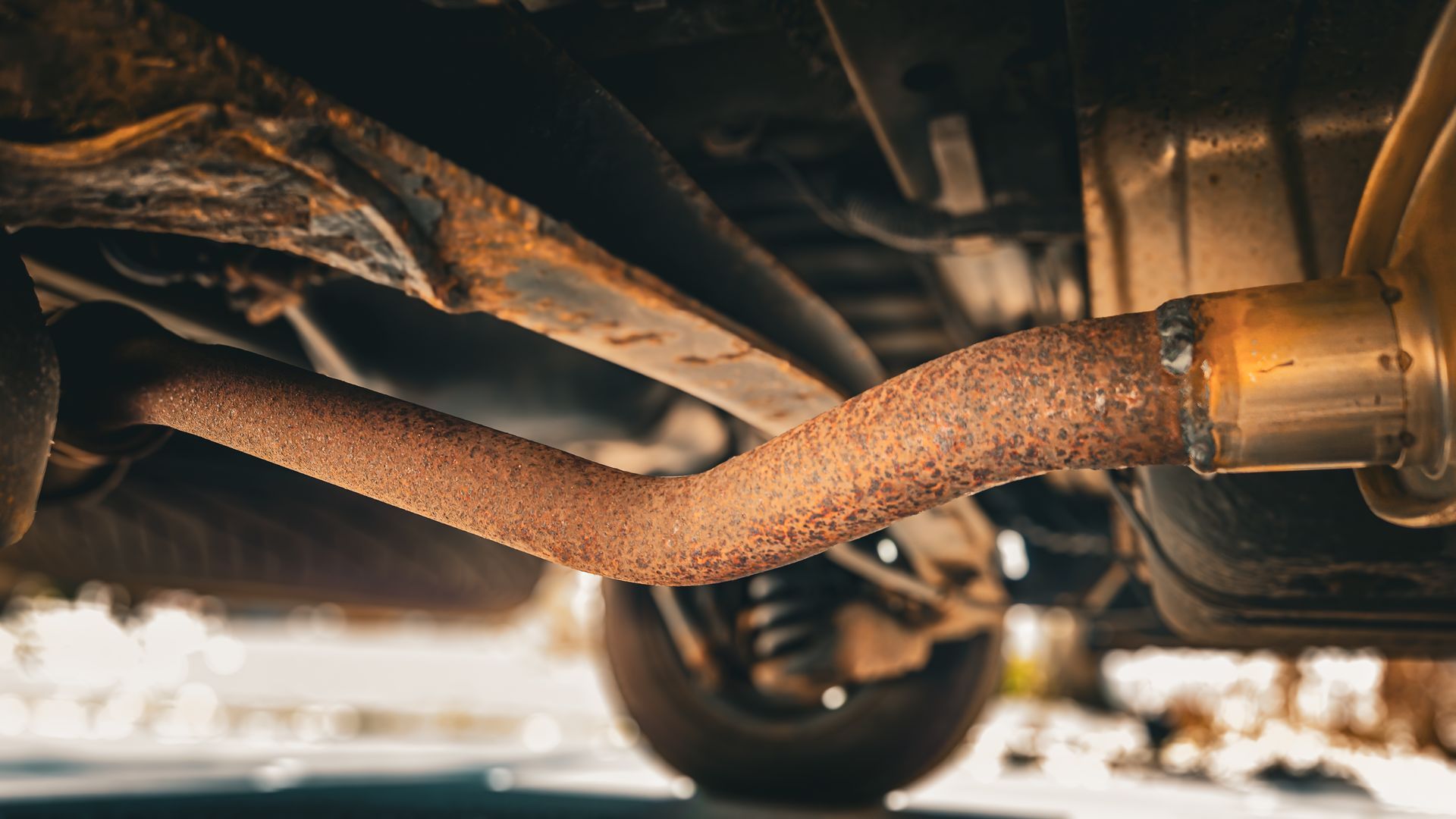
2. Rusted or Corroded Brake Lines
Mississippi experiences high humidity, heavy rainfall, and frequent mud and dirt exposure. When moisture remains on the underside of a truck, steel brake lines corrode.
Corrosion eventually creates:
- Pitting
- Pinholes
- Flaking
- Complete line failure
Signs:
- Fluid appearing along the frame
- Brake pedal gradually sinking
- Sudden near-total hydraulic loss
Even light rural gravel roads in West Point or Columbus can throw debris that accelerates brake line corrosion.
3. Brake Caliper Seal Leaks
Calipers contain pistons that use rubber seals to maintain pressure. These seals wear out with age, heat, or contamination.
Causes:
- Excessive braking heat
- Long highway driving
- Stop-and-go traffic
- Towing or hauling
- Old fluid that breaks seals down
Symptoms:
- Wet caliper surfaces
- Fluid inside wheel
- Truck pulling to one side
Heat is a major factor on long Mississippi summer drives and during hauling work.
4. Wheel Cylinder Leaks (Rear Drum Brakes)
Many trucks still use drum brakes in the rear. Inside each drum is a wheel cylinder. When its seals fail:
You may notice:
- Brake fluid inside the drum
- Wet backing plates
- Weak braking in the rear
- Increased pedal travel
Drum brake leaks often go unnoticed because the components are enclosed.
5. Master Cylinder Failure
The master cylinder is the main hydraulic pump. It can fail internally or externally.
External failure:
- Fluid leaking from the master cylinder body
- Leaks dripping on the brake booster
- Low fluid in reservoir
Internal failure:
- Pedal slowly sinks to the floor when pressed
- Weak braking
- No visible leak
Internal master cylinder failure is especially dangerous because there is no puddle to warn you.
6. Loose or Damaged Brake Line Fittings
Brake systems include many fittings that can develop leaks:
- Banjo bolts
- Copper sealing washers
- Brake line junctions
- Bleeder screws
- ABS pressure fittings
Symptoms:
- Fluid around fittings
- Slow, steady fluid loss
- Inconsistent pedal feel
Bumpy rural roads in Oktibbeha, Lowndes, and Clay County contribute to fitting loosening over time.
7. ABS Pump or Module Leaks
ABS units contain multiple seals and internal valves that operate under high pressure. When they leak:
You may see:
- Brake fluid around the ABS module
- ABS or brake light on the dashboard
- Soft or inconsistent brake pedal
Because ABS operates at higher pressure, leaks worsen faster.
8. Brake Booster Contamination
If the rear seal of the master cylinder fails, brake fluid can leak into the brake booster.
Symptoms:
- Fluid at booster-master connection
- Vacuum loss
- Weak brake assist
This issue often requires replacement of both components.
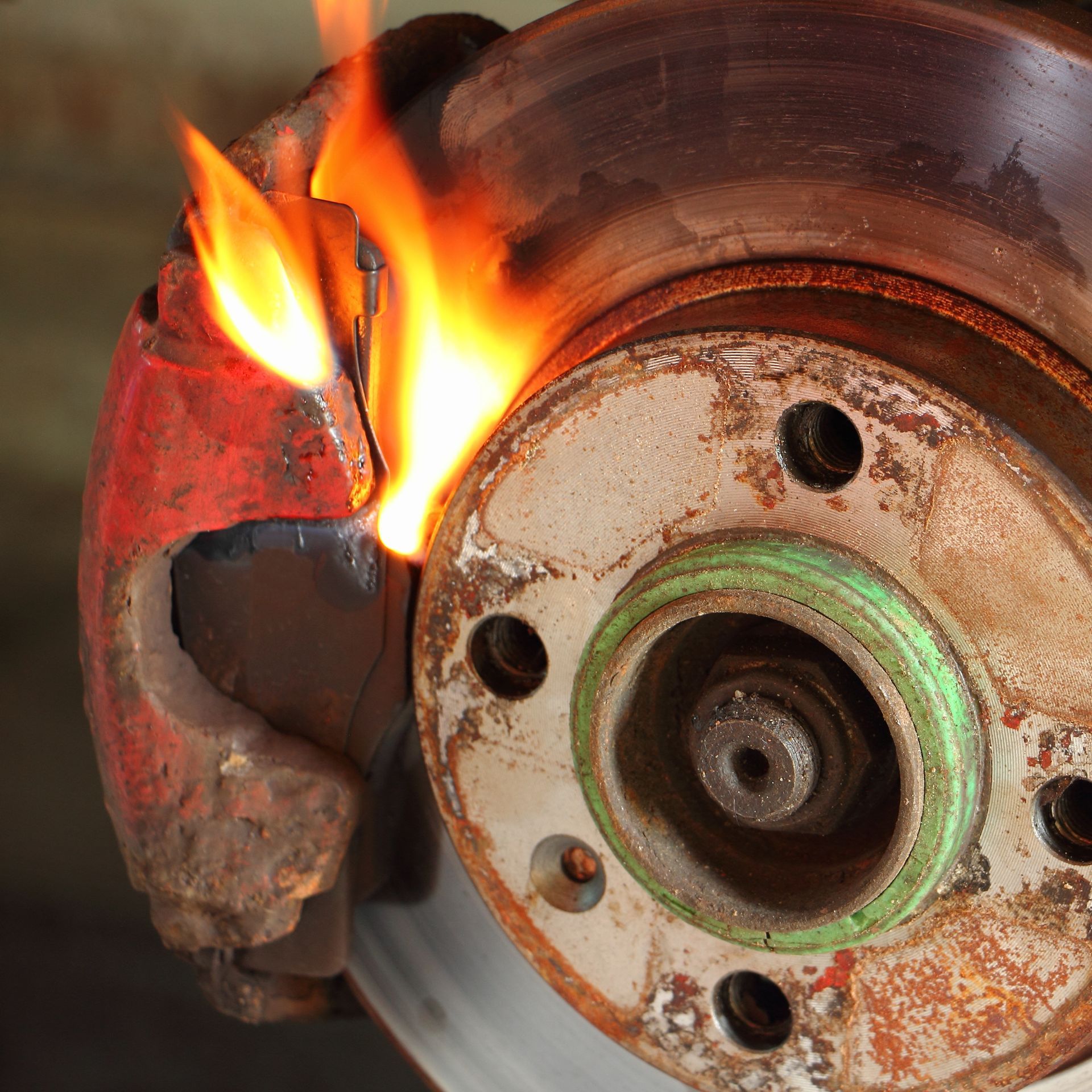
9. Heat-Related Component Failure
Mississippi’s heat—especially during long summer highway drives—causes:
- Seal breakdown
- Hose expansion
- Fluid thinning
- Excessive brake heat buildup
Symptoms:
- Fluid leak only when hot
- Burning smell
- Brake fade
Heat weaknesses show more often during towing, hauling, or long highway runs.
Section 4: Warning Signs That Your Truck Is Actively Leaking Brake Fluid
Brake fluid leaks produce several unmistakable symptoms.
1. Soft, spongy, or sinking brake pedal
Air in the system reduces pressure.
2. Brake warning or ABS light
Triggered by low pressure or low fluid.
3. Visible puddles or wet streaks
Often under the wheels or the engine bay.
4. Lower brake fluid reservoir
Any fluid loss indicates a leak.
5. Increase in stopping distance
Hydraulic pressure loss directly reduces braking.
6. Truck pulling left or right
One side may not be receiving enough pressure.
7. Chemical smell or burning odor
Brake fluid vaporizing on hot parts.
8. Inconsistent brake pedal behavior
Changes in firmness from one stop to the next.
Any of these symptoms means the situation is already dangerous.
Section 5: Why Brake Fluid Leaks Are Even More Dangerous for Trucks
Brake fluid leaks affect every vehicle, but trucks face additional risks.
Trucks weigh more
More mass requires more braking power.
Trucks tow and haul
Greater hydraulic force means leaks worsen faster.
Trucks drive rural roads
More debris, more uneven surfaces, more vibration.
Trucks have larger brake systems
More components = more potential leak points.
Trucks experience more heat buildup
Especially during towing or long-distance travel.
A brake fluid leak in a truck is never minor.
Section 6: Can You Drive a Truck With a Brake Fluid Leak?
The clear, direct answer:
No.
Driving with a brake fluid leak risks:
- Total brake failure
- Intersections becoming hazardous
- Rear-end collisions
- Loss of stopping power at highway speeds
- Dangerous towing situations
- Zero brake assist on rural or wet roads
Even a small leak can fail catastrophically with one hard press of the pedal.
Section 7: How Professional Technicians Diagnose Brake Fluid Leaks
A complete brake diagnostic involves more than topping off the fluid.
Proper diagnostics include:
1. Checking brake fluid condition
Reveals contamination and internal component wear.
2. Inspecting the master cylinder
Both internal and external failure checks.
3. Inspecting every brake line
Front to back, including junctions and unions.
4. Checking brake hoses
Cracks, softness, bulges, wetness.
5. Inspecting calipers and wheel cylinders
Seal leaks, piston travel, uneven operation.
6. Evaluating the ABS module
Testing for leaks and pressure irregularities.
7. Inspecting pads, shoes, rotors, and drums
Wear patterns provide diagnostic clues.
8. Pressure testing the system
Ensures the system holds pressure without sinking.
This reveals not only where the leak is—but the overall health of the braking system.
Section 8: How to Prevent Future Brake Fluid Leaks
Preventive measures include:
1. Regular brake fluid checks
Identify leaks early.
2. Scheduled brake fluid replacement
Old fluid absorbs moisture and corrodes components.
3. Annual brake line inspections
Critical in the humid Mississippi climate.
4. Brake hose inspections
Rubber degrades faster in heat and humidity.
5. Avoid riding the brakes
Downshift on hills instead.
6. Proper towing habits
Allow brakes to cool when hauling heavy loads.
7. Address any symptoms immediately
Brake problems escalate quickly.
Section 9: Mississippi Driving Conditions That Increase Brake System Wear
Local conditions in the Golden Triangle heavily stress truck brakes.
1. High humidity
Accelerates brake line corrosion.
2. Heavy rain
Water and mud coat brake components.
3. Rural roads and gravel surfaces
Throw debris into brake lines and hoses.
4. Hot summers
Increase brake temperatures significantly.
5. Agricultural or industrial use
Adds load, stress, and heat to braking systems.
Regular brake inspections are essential in these conditions.
Section 10: When You Should Bring Your Truck In Immediately
You need professional brake service immediately if you notice:
- Fluid puddles
- Soft or sinking brake pedal
- Brake or ABS warning light
- Longer stopping distance
- Burning smell
- Pulling while braking
- Low brake fluid level
- Inconsistent pedal feel
Brake fluid leaks are not slow failures.
They’re instant risks.
William Wells Tire & Auto
Expert Brake Fluid Leak Repair & Full Brake Diagnostics
Serving Starkville, Columbus, and West Point
Starkville – 12919 MS-182, Starkville, MS 39759 – (662) 268-4081
Columbus – 1625 Gardner Blvd, Columbus, MS 39702 – (662) 240-2414
West Point – 93 W Broad St, West Point, MS 39773 – (662) 495-8558
Website: https://www.williamwellstireandautorepair.com/
William Wells Tire & Auto serves the entire Golden Triangle region with advanced brake diagnostics, brake line replacement, hydraulic system repair, master cylinder service, ABS diagnostics, and full brake system restoration for trucks of all makes and models.
When your truck is leaking brake fluid, you are driving with a compromised braking system. Their technicians ensure your brakes are restored to full strength, safety, and reliability so your truck is ready for any road, any load, and any distance.
You can watch the video