Engine overheating
Why Is My Engine Overheating? A Complete Guide for Drivers in Starkville, Columbus, and West Point, MS
You’re driving down Highway 12, heading through downtown Columbus, or moving along Old Waverly Road toward West Point when your temperature gauge suddenly rises—higher than normal. Maybe you smell something sweet, maybe you spot steam coming from under the hood, or your dashboard warning light flashes with urgency.
Engine overheating is one of the most stressful issues a driver can experience. It’s sudden, unpredictable, and puts your vehicle at immediate risk.
But here’s the truth every driver needs to understand:
An engine does not overheat for no reason. Overheating is the visible symptom of a hidden mechanical failure in your cooling or lubrication system.
In the Golden Triangle region of Mississippi—Starkville, Columbus, and West Point—vehicles deal with hot summers, rural roads, city traffic, long highway drives, and humidity. These conditions place heavy demand on cooling systems, especially in older vehicles or those with worn components.
This guide breaks down everything you need to know:
- What engine overheating means
- The most common causes
- Warning signs before it happens
- Exactly what to do when it starts
- The severe damage it can cause
- How technicians diagnose the true problem
- How to prevent overheating in Mississippi conditions
- When to get your vehicle inspected
Let’s begin.
Section 1: What Engine Overheating Actually Means
Your engine is engineered to operate within a tightly controlled temperature range. Inside that range:
- Oil lubricates and cools properly
- Metals expand and contract predictably
- Sensors read correctly
- Gaskets and seals hold pressure
When your engine overheats, that balance breaks.
Overheating means:
- Heat is being produced faster than the cooling system can remove it.
Combustion always generates intense heat—coolant and airflow must remove it constantly. - Coolant is failing to do its job.
This could be from low coolant, restricted flow, or a mechanical failure. - Airflow isn’t removing heat from the radiator.
Without airflow, even the right amount of coolant can’t release heat. - Engine oil loses its protective qualities.
Overheated oil thins and breaks down, increasing friction and heat even further. - Metal components expand beyond safe tolerances.
Once temperatures exceed the designed limit, internal distortion begins.
Overheating is not a minor issue. It is a mechanical emergency that can escalate quickly.
Section 2: The Most Common Causes of Engine Overheating
Overheating always has a cause. Below are the most common reasons engines overheat, especially in Mississippi’s climate.
1. Low Coolant Level
Coolant is the lifeblood of your engine’s temperature control. When coolant levels drop:
- Heat is not absorbed effectively
- Temperature rises rapidly
- Hot spots form inside the engine
Coolant loss can come from:
- Radiator leaks
- Aged or cracked hoses
- Loose clamps
- Leaking water pump
- Faulty radiator cap
- Heater core leaks
- Internal engine problems like head gasket failure
In the Mississippi heat—especially on long drives between Starkville and Columbus—low coolant becomes dangerous quickly.
2. Cooling Fan Problems
Cooling fans are critical when:
- Idling or in slow traffic
- Running the A/C
- Driving in local areas with minimal airflow
A cooling fan that fails will cause:
- Overheating at idle
- Overheating in traffic
- Overheating during parking lot maneuvering
- Temperatures dropping once moving at highway speed
Common causes:
- Failed fan motor
- Blown fuse
- Bad relay
- Faulty fan switch
- Wiring or connector issues
A fan failure is one of the leading causes of overheating in city areas like Columbus and Starkville.
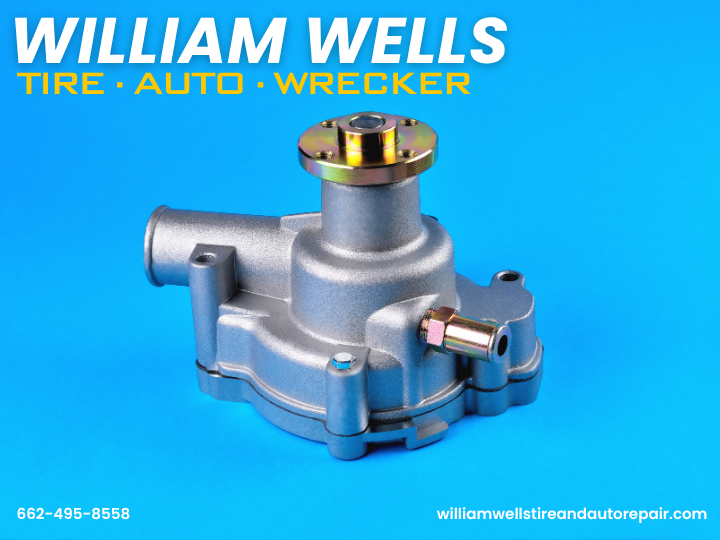
3. Water Pump Failure
The water pump circulates coolant throughout the cooling system. When it fails:
- Coolant stops moving
- Engine temperature spikes
- Overheating happens almost immediately
Warning signs include:
- Coolant dripping from the pump
- Grinding or whining noises
- Wobbling pump pulley
- Overheating that worsens with acceleration
Water pumps often fail gradually, then quickly escalate into a major overheating incident.
4. Stuck Thermostat
A thermostat controls coolant flow based on temperature. When stuck closed:
- Coolant is trapped in the engine
- Heat cannot escape
- Temperature spikes fast
A stuck-open thermostat causes other issues, but a stuck-closed one is a direct overheating trigger—especially on short city drives.
5. Radiator Issues
Radiators experience significant wear in Mississippi due to:
- Heat
- Humidity
- Bugs
- Road debris
- Mineral-rich water
Common radiator problems include:
- Internal clogging
- External blockage
- Cracked tanks
- Leaks
- Corrosion
A compromised radiator can cool “just enough” in cool weather but fail entirely in summer.
6. Blocked Coolant Passages
Inside the engine and radiator are small passages that allow coolant flow. When coolant is not serviced regularly, these passages clog with:
- Rust
- Scale
- Sludge
- Debris
Restricted flow causes:
- Hot spots
- Slow overheating
- Overheating under load
This issue often appears in older or high-mileage vehicles.
7. Head Gasket Failure
A head gasket failure is among the most serious overheating causes.
Symptoms include:
- White exhaust smoke
- Bubbles in coolant
- Milky oil
- Coolant loss with no visible leak
- Overheating soon after starting
This is a severe mechanical failure requiring immediate attention.
8. Air Pockets in the Cooling System
Air in the cooling system prevents coolant from circulating properly.
Air pockets usually appear after:
- Improper coolant fill
- Recent repairs
- A slow leak
- Boiling coolant from a previous overheating
Symptoms include:
- Erratic temperature gauge movement
- Heater blowing cold air
- Intermittent overheating
Air pockets create unpredictable and dangerous conditions.
9. Low or Degraded Engine Oil
Oil helps cool internal components. When oil is low or degraded:
- Friction increases
- Heat rises
- Overheating risk skyrockets
This is especially common in vehicles that tow, idle frequently, or drive long rural distances.
Section 3: Early Warning Signs Before Overheating Happens
Overheating often gives you early clues.
Watch for:
- Temperature gauge running hotter than usual
- Sweet-smelling odor from coolant
- Small steam trails after parking
- A/C not cooling well
- Heater blowing cold when it shouldn’t
- Coolant puddles under the car
- Cooling fan running loudly or constantly
- Warning lights on the dashboard
- Overheating in traffic but not highway driving
Drivers across Starkville, Columbus, and West Point often see these signs during slow traffic, warm weather, or uphill driving.
Ignoring these signs leads directly to breakdowns.
Section 4: What To Do If Your Engine Starts Overheating
Your actions in the moment determine whether your engine survives.
Step 1: Turn Off the A/C
This reduces engine load immediately.
Step 2: Turn the Heater On High
This moves heat away from the engine.
Step 3: Pull Over Safely
Do not push it a few more miles. Damage escalates rapidly.
Step 4: Turn Off the Engine
Stop combustion heat immediately.
Step 5: DO NOT Open the Radiator Cap
The system is under extreme pressure and can cause severe burns.
Step 6: Allow the Engine to Fully Cool
This may take 20–45 minutes.
Step 7: Arrange for Professional Inspection
If you restart the vehicle and the temperature climbs again, the underlying issue must be diagnosed before driving further.
Section 5: The Damage Overheating Can Cause
Overheating is destructive. Even a single overheating event can cause:
- Warped cylinder heads
- Blown head gasket
- Cracked engine block
- Cracked radiator
- Melted plastic components
- Sensor failure
- Rapid oil breakdown
- Coolant contamination
- Irreversible engine damage
Driving an overheating vehicle, even for one minute too long, can turn a repairable issue into a major engine failure.
Section 6: Why Overheating Is Common in Mississippi’s Golden Triangle Region
Local driving conditions contribute heavily to cooling system strain.
1. Hot Summers
High temperatures in Starkville, Columbus, and West Point reduce cooling efficiency.
2. Frequent Stop-and-Go Traffic
City driving puts constant stress on cooling fans.
3. Rural Road Conditions
Dust, bugs, and debris clog radiators and reduce airflow.
4. Long Highway Distances
Driving between Starkville, Columbus, and West Point at sustained speeds increases heat generation.
5. High Humidity
Humidity slows heat dissipation and stresses coolant condition.
6. Older Vehicles
Many local vehicles are kept for 10–20+ years, extending the life of cooling components beyond their prime.
All of these factors make cooling system maintenance essential in this region.
Section 7: How Professional Technicians Diagnose Overheating
Proper diagnosis is more than topping off coolant. It requires a systematic evaluation of the entire cooling system.
A complete professional diagnostic includes:
Cooling System Pressure Test
Detects leaks in hoses, radiator, water pump, heater core, and gaskets.
Thermostat Evaluation
Ensures proper opening and closing temperature.
Cooling Fan Operation Test
Verifies relays, sensors, modules, and motor function.
Water Pump Inspection
Checks circulation, bearing condition, noise, and leaks.
Radiator Flow and Condition Analysis
Identifies internal restrictions or cold spots.
Coolant Quality and Mixture Testing
Examines pH, contamination, mixture strength, and condition.
Exhaust Gas Test
Detects combustion gases in coolant—critical for diagnosing head gasket issues.
System Bleeding
Removes air pockets that disrupt coolant circulation.
This full-system approach identifies the true cause and prevents recurring overheating.
Section 8: How To Prevent Engine Overheating
Prevention is the best defense against overheating.
1. Regular Cooling System Inspections
Hoses, clamps, radiator, and reservoir should be checked routinely.
2. Timely Coolant Exchanges
Old coolant becomes corrosive, causes buildup, and reduces flow.
3. Monitor Oil Levels
Oil is essential to temperature control.
4. Replace Weak Radiator Caps
A failing cap prevents the system from holding pressure.
5. Watch Temperature Gauge Behavior
Even small changes signal trouble.
6. Fix Small Leaks Immediately
Minor leaks become major failures quickly.
7. Seasonal Cooling System Checks
Before the Mississippi summer heat hits, inspections are crucial.
8. Verify Cooling Fan Operation
Fans must activate consistently at the correct temperature.
Section 9: When to Get an Immediate Cooling System Inspection
Schedule a professional inspection right away if:
- The engine has overheated even once
- Temperature gauge sits higher than usual
- You see steam or vapor
- Coolant levels keep dropping
- You smell coolant
- The heater blows cold
- Overheating happens at idle or in traffic
- The cooling fan runs excessively or not at all
These are active signs of cooling system stress.
Section 10: Cooling System & Overheating Repair in Starkville, Columbus & West Point, MS
Drivers throughout Starkville, Columbus, and West Point rely on local experts for accurate overheating diagnosis and cooling system repair.
William Wells Tire & Auto provides:
- Complete overheating diagnostics
- Cooling system pressure testing
- Radiator repair and replacement
- Thermostat testing and replacement
- Water pump inspection and replacement
- Cooling fan electrical testing and repair
- Coolant leak detection and repair
- Coolant exchange
- System bleeding to remove air pockets
- Post-overheating engine health evaluation
If your temperature gauge has started to climb, or if you’ve already experienced overheating, the safest next step is a full cooling system inspection at the nearest location.
William Wells Tire & Auto – Three Locations
Starkville, MS
12919 MS-182
Phone: (662) 268-4081
Columbus, MS
1625 Gardner Blvd
Phone: (662) 240-2414
West Point, MS
93 W Broad St
Phone: (662) 495-8558
Website: https://www.williamwellstireandautorepair.com/
You can watch the video